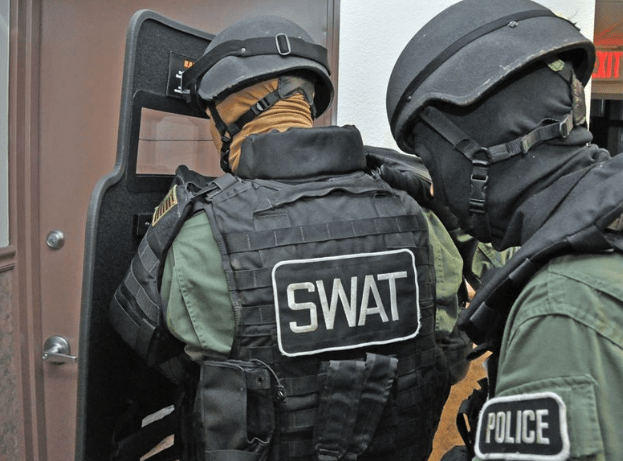
The most indelible image of this summer’s unrest in Ferguson, Mo., was that of a battle-clad officer atop an armored vehicle aiming his rifle at protesters. Perhaps more than any other, that single image helped forge a battle line in a national debate over “police militarization.” That’s exactly the wrong place to start the conversation. In reality, the issues highlighted around the country this summer were less about Mine-Resistant Ambush Protected (MRAP) vehicles and military gear used than they were about the policies and procedures governing their use, and the transparency of investigations into how they were used. Cops know acutely how perception becomes reality. And no one can deny that MRAPs look, well, scary. (One can work to change the optics: a San Diego (Calif.) school district placed red crosses and the word, “Rescue” on its MRAP to make it look more like an emergency response vehicle and less like a tank.) Like you, I carry “scary” equipment all the time. It doesn’t affect my ability to effectively patrol or investigate. But if I were to arrive at a witness interview in black pajamas, Oakley wraparounds, a backward ball cap, an earpiece and my kitted-out M4 slung over my external armor carrier—eyebrows would rise.
The cost of over-deployment is huge. The perception of a body armor encased, armored personnel carrier driving police force is doing us a lot of harm. It’s costing us cycles in the media, putting us on the defensive to explain why we have the tools we need. It’s costing us hard-won and crucial community relations, as civic leaders—either genuinely or opportunistically—say they feel faced-down in their own homes and streets.
We can do better through effective training, efficient use of technology and common sense. Bottom line: Using an MRAP when it’s not called for is nothing short of a failure of intelligence, policy and leadership.
Equipment & Intent
There’s no question communities have needed armored vehicles since well before the phrase “Homeland Security” became part of common vernacular. Civilians and officers under fire require safe, rugged transport to safety. That’s our job. Period.
So, how do you determine when the deployment of military-grade equipment and tactics is justified?
Rather than seeking a litmus test for go/no-go deployment, we must rise above talk of specific equipment—armored cars, uniform styles and caliber and so forth—and get to what truly matters: tactics, techniques and a policing program that takes into account the single greatest indicator of appropriateness—context. Officers responding out of context will do one of two things: overreact or underreact. Either way they will appear to bystanders as just what they are in that situation: clueless. That’s very unfair to the officers, and it degrades community trust in them and their judgment.
The challenge of today’s officer is to translate the context of street-level experience and hunches into useable data. The real challenge is actually the ease with which this can be done. We live in a world drowning in digital data—a world drowning in devices and software for storing and sharing that data, with multiple perspectives on any single event. And, although it’s complicated, surrender is not an option.
When it comes to mobile data specifically, law enforcement, in a mirror image of public scrutiny of tools like MRAPs, tends to get caught up discussing equipment rather than intent. Management must support intelligence first—its gathering as well as its analysis. The platform from which this intelligence is derived and delivered is, although noteworthy, secondary.
Take Your Data with You
Mobile technologies—body and dash cams, smartphones, microphones, laptops and surveillance cameras—and, especially, the mobile broadband capabilities to transmit them, are no longer “nice to have.” These are table stakes. Equally important are the policies that will support and encourage their use and make the data more useable.
Some of the best intelligence gathered on and transmitted to mobile devices isn’t collected through traditional police investigations. It comes from protestors on mobile devices. Case in point: An incident becomes a crowd, a crowd becomes a mob and a robust program of social media monitoring can mean the difference between a protest and a riot. Your officers need to be, at a minimum, aware of this.
Context includes intent—and many misunderstandings of intent can occur when law enforcement sees a large group that seems angry. Crowds are hard to read. But individuals have shown time and again that they are specific about intent when speaking on social media channels. Fail to listen to these individuals at the peril of your community.
Conclusion
Mobile devices put the “reality” in real-time. They stream video, display images and transmit audio and text to wherever you or your officers may be. To put it more broadly, used together with the software they support, they are the media of our age. Without these tools and a culture of intelligence in your department, it’s nearly impossible to have the context to deploy appropriately.
Don’t be clueless. It’s much easier to lose a community’s trust with a rude show of force than it is to earn its respect through recurrent acts of service and heroism. On the other hand, respond too late and with too little force, and it’s your officers who will pay. An agency that claims to not need, or not have the money to invest in these life-saving technologies should consider the cost of not having them when needed.
*************