Law enforcement agencies across the country are again facing a legislative challenge to one of their most significant equipment pipelines, as a Georgia congressman renews his push to restrict the Pentagon’s 1033 military equipment program. Representative Henry C. “Hank” Johnson Jr. (GA-04) introduced H.R. 7766, the Stop Militarizing Law Enforcement Act of 2026, on March 3, 2026. The bill was referred to the House Armed Services Committee following its introduction.
The 1033 program, administered through the Defense Logistics Agency’s Law Enforcement Support Office, allows the federal government to transfer surplus military equipment to federal, state, tribal, and local law enforcement agencies at no cost beyond shipping. Through that program, the Department of Defense has transferred more than $8 billion in surplus military equipment to law enforcement agencies across the country.
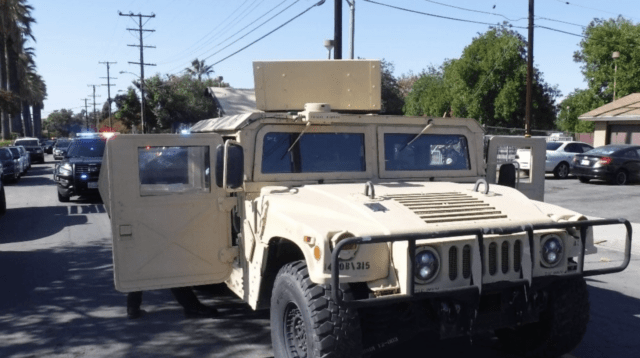
Johnson’s bill would amend Title 10 of the United States Code to prohibit specific categories of equipment transfers. Among the items the bill would block are military weapons, long-range acoustic devices, grenade launchers, weaponized drones, armored military vehicles, and grenades or similar explosives. The legislation would also require agencies receiving equipment to certify they can account for all of it, ban re-gifting of military property between agencies, and strengthen tracking and oversight requirements across the program.
This is not the first time Johnson has introduced this legislation. He has repeatedly brought versions of this bill before Congress since 2014, and the effort has not yet become law despite passing the House as part of broader policing reform packages in prior sessions. Previous presidential administrations have attempted to rein in the 1033 program through executive orders, but those orders were reversed with each change in administration, including President Trump’s rescission of President Obama’s order in 2017. Johnson has argued that only a congressional statute can produce lasting reform.
H.R. 7766 was introduced with 19 House Democrats listed as original cosponsors and has drawn backing from a coalition of civil liberties organizations, including the American Civil Liberties Union and Amnesty International USA.
Law enforcement professionals and their advocates have consistently pushed back on efforts to restrict 1033 transfers, arguing the program provides critical resources to departments, particularly smaller agencies and those in rural areas, that could not otherwise afford armored vehicles and other protective equipment. Officers working on high-risk warrant service, active shooter responses, and barricaded-suspect situations have directly benefited from equipment obtained through the program.
The bill now sits in the House Armed Services Committee. Committee action will determine whether the legislation advances to the full House for debate and a vote. If approved by the House, it would still need to pass the Senate and be signed by the president to become law.