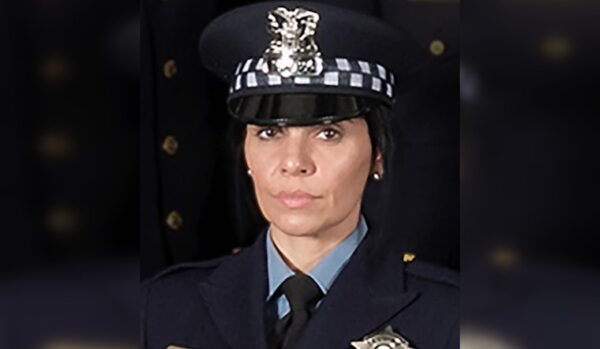
Chicago — A report from the Illinois Answers Project has put fresh scrutiny on the fatal shooting of Chicago Police Department Officer Krystal Rivera, who was killed by her partner, Officer Carlos Baker, during a police chase in Chatham. What the department first described as an accident is now the focus of questions about Baker’s disciplinary history, a previously unreported personal relationship between the two officers, and how internal decisions allowed him into a coveted tactical unit.
What happened
In June, Rivera and Baker, both assigned to the department’s sixth district tactical team, followed two men into an apartment building. Police say one of the suspects was armed. According to official accounts, Baker either tripped or accidentally fired his weapon, and a bullet struck Rivera, killing her. The incident marked the first reported officer‑on‑officer death in the Chicago police force in nearly four decades.
New reporting: Baker’s disciplinary record and promotion
The Illinois Answers Project and partner reporting revealed that Baker had accumulated roughly a dozen disciplinary complaints prior to the shooting, placing him in a small cohort of officers with that level of complaints.
Several of those complaints were minor, but at least one allegation from his probationary period was serious. Reporters say Baker allegedly flashed a gun at a woman he met while trying to date her. Because the incident allegedly occurred while he was still on probation, department rules would have allowed for immediate termination, a step supervisors did not take.
The reporting also shows Baker applied for a position on the tactical team twice. According to internal memos cited in the reporting, his first application was rejected by the chief of patrol due to disciplinary issues. A year later, despite another complaint that led to a sustained finding of insubordination, his second application was approved, and he was accepted into the tactical unit.
Personal relationship and reassignment request
Civil filings and a lawsuit filed by Rivera’s family say the two officers had been romantically involved and had recently broken up. According to the family’s lawyers, Rivera feared Baker and had asked the department to reassign them so they would not be together. Those requests and the context of their relationship have become central to questions about whether the department acted to prevent foreseeable harm.
Transparency concerns and body camera footage
The shooting and the subsequent reporting have generated public demand for transparency. Investigative reporters and Rivera’s family say body camera footage could clarify what happened in the moments leading up to the fatal shot.
However, a judge in the related criminal matter has so far declined to release the body camera footage. Attorneys and journalists have challenged that decision, arguing that releasing the footage would answer critical questions about the sequence of events and whether the shooting was truly accidental.
Department response and unanswered questions
The Chicago Police Department has provided limited comment to reporters. The Fraternal Order of Police offered an alternative explanation for why Baker’s first application to the tactical team was rejected, saying he lacked the three required years of service at that time. Internal memos cited in reporting, however, attribute the rejection to disciplinary concerns, creating mixed messages about the rationale behind personnel decisions.
Key unanswered questions include:
- Why Baker was allowed to remain on the force after multiple complaints, including serious allegations while on probation.
- Why the department ultimately approved his placement on the tactical team despite prior rejections and a suspended complaint for insubordination.
- What the body camera footage shows and whether courts will make it public as the family’s lawsuit and criminal proceedings move forward.
Why this matters
Officer‑on‑officer shootings are rare and carry particular weight for a department and a city. Beyond the human tragedy, the case highlights broader issues about internal discipline, promotion decisions for high‑risk units, and how departments handle allegations against officers during probationary periods.
For the public and for Rivera’s family, transparency around investigative materials and internal personnel records is central to trust in the process and accountability in policing.
What’s next
The family’s civil lawsuit remains active, and reporters say they will continue to follow the case as additional records and court decisions become available. The release of body camera footage would likely be pivotal. Until then, legal filings, internal memos, and investigative reporting will be the primary sources of new information.
The incident has prompted renewed attention to how complaints are handled internally and how departments vet officers for high‑pressure assignments. As the investigation and litigation progress, the community, the press, and the courts will continue to press for answers.