Introduction: Transparency, Accountability, and the Politics of Use-of-Force Review
Across the United States, police executives are navigating an increasingly complex environment when it comes to officer-involved shootings. Public expectations for transparency have grown dramatically, while political pressures have reshaped how prosecutors evaluate police use of force. One of the most closely watched examples of this evolving landscape is Travis County, Texas, where District Attorney José Garza implemented a sweeping policy in 2021 mandating grand jury review of every officer-involved shooting.
The policy was intended to eliminate the perception that prosecutors were shielding law enforcement officers from accountability. Instead of relying on a district attorney’s discretionary “common sense” review to determine whether a shooting was clearly justified under Texas law, Garza’s policy required that every lethal use-of-force incident be presented to a grand jury of citizens.
Yet in March 2026, an incident on Austin’s West Sixth Street, where officers shot and killed an active gunman during a mass casualty attack outside a crowded bar, revealed a critical tension between policy and practicality. After intense public and political scrutiny, Garza made a rare exception to his mandatory policy, announcing that the officers involved would not be subjected to grand jury review because their actions were “clear and indisputably justified.”
For police executives nationwide, the episode provides a valuable case study in the limits of rigid policy frameworks when confronted with real-world operational realities. The Austin case illustrates the delicate balance between transparency, prosecutorial discretion, and the practical necessity of common-sense evaluation of police use of force.
The 2021 Paradigm Shift in Travis County
The Travis County policy originated during a period of intense national debate about policing and accountability. Following the death of George Floyd in 2020 and a series of high-profile police use-of-force incidents, progressive prosecutors across the country sought reforms intended to increase oversight of law enforcement.
In Travis County, José Garza campaigned for district attorney on a platform that included aggressive review of police use-of-force cases. After defeating incumbent Margaret Moore in a decisive primary runoff, Garza implemented a policy requiring that all officer-involved shootings be referred to a special grand jury.
Under the previous discretionary model, prosecutors would first evaluate whether the use of force appeared legally justified under Texas law. If the facts were clear, for example, if an officer was fired upon and returned fire, charges would typically be declined without a grand jury presentation.
Garza’s policy eliminated this gatekeeping role. Instead, every case would be presented to a grand jury regardless of how clear the justification appeared. The shift fundamentally altered the structure of officer-involved shooting investigations in Travis County.
Policy Comparison at a Glance
| Operational Aspect | Pre-2021 Discretionary Model | Post-2021 Mandatory Model |
| Referral Standard | Only disputed or potentially unlawful cases referred | All officer-involved shootings referred |
| Decision Authority | District attorney screened for clear legal justification | Grand jury review became default mechanism |
| Public Messaging | Explained decisions through legal memoranda and case reports | Emphasized transparency and citizen oversight |
| Operational Impact | Shorter uncertainty period in clear cases | Higher investigative and morale burden on officers and agencies |
The Role of the Civil Rights Unit
To manage the expanded workload created by the policy, the Travis County District Attorney’s Office relied heavily on its Civil Rights Unit. Originally created in 2017, the unit was responsible for investigating alleged misconduct by public officials, including police use-of-force cases. Under the Garza administration, the unit became the central mechanism for investigating officer-involved shootings.
Investigators and attorneys from the unit respond directly to shooting scenes alongside the Austin Police Department’s Special Investigations Unit. Their role is to independently gather evidence, including body camera footage, witness statements, and forensic findings. Once the investigation is complete, the evidence is presented to a special grand jury for review.
Supporters of the system argue that it ensures independence from the police department and provides an additional layer of accountability. Critics, however, contend that the structure effectively guarantees that officers will face prolonged legal scrutiny regardless of whether their actions were justified.
For police leaders, the broader operational concern is morale and recruitment. Officers who believe that any use of force, no matter how justified, will automatically trigger a criminal review may hesitate in critical moments or reconsider their willingness to serve in high-risk assignments.
The Protest Indictments and the Deepening Divide
Relations between the Travis County District Attorney’s Office and the Austin Police Department deteriorated sharply following the 2020 protests after George Floyd’s death. During those demonstrations, officers used less-lethal munitions, including bean bag rounds, to disperse crowds. Several protesters suffered severe injuries, leading to civil lawsuits and public controversy.
In 2022, Garza’s office secured indictments against 21 Austin police officers for aggravated assault by a public servant related to the protest response. The indictments represented one of the largest mass prosecutions of police officers in modern United States history.
For reform advocates, the indictments demonstrated a willingness to hold law enforcement accountable. For police leaders, the prosecutions signaled a dramatic escalation in the adversarial relationship between the prosecutor’s office and the police department.
The situation ultimately collapsed in late 2023 when prosecutors dismissed charges against 17 of the officers after determining that securing convictions would be unlikely. The episode reinforced concerns within law enforcement that the new prosecutorial approach prioritized political signaling over practical outcomes.
Prosecutorial Results and the Limits of OIS Prosecutions
Despite the policy shift, Travis County has struggled to secure convictions in officer-involved shooting cases. The most prominent case involved Austin Police Officer Christopher Taylor, who was charged with murder in the 2020 shooting of Michael Ramos.
After years of litigation, Taylor was ultimately convicted only of the lesser charge of deadly conduct and sentenced to two years in prison. Other cases have resulted in mistrials or no indictments.
These outcomes reflect a broader reality recognized by police executives and prosecutors alike: criminal convictions for on-duty use of force are inherently difficult to obtain because the legal standard requires proof beyond a reasonable doubt that the officer’s actions were unreasonable under the circumstances.
Legislative Pushback and the “Rogue Prosecutor” Debate
The aggressive use-of-force prosecutions in Travis County triggered a political response from the Texas Legislature. In 2023, lawmakers passed House Bill 17, which allows for the removal of prosecutors who adopt policies that appear to selectively enforce or decline enforcement of state law.
Supporters argued that the legislation was necessary to prevent politically motivated prosecution policies. Critics countered that it undermined the independence of locally elected prosecutors. Regardless of perspective, the legislation illustrates the broader political tension surrounding progressive prosecutorial reforms.
The Austin Bar Shooting: A “Common Sense” Test Case
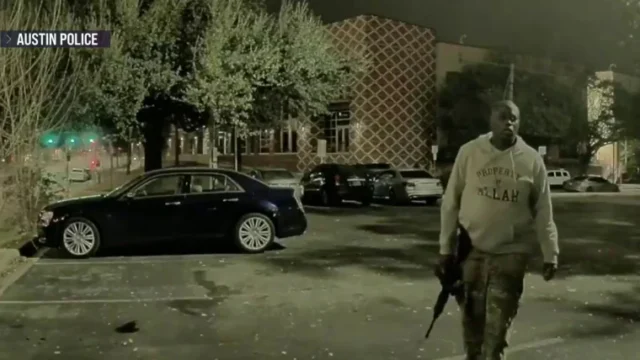
On March 1, 2026, those tensions came to a head during a mass shooting on West Sixth Street in Austin’s entertainment district. A gunman opened fire outside a crowded bar, killing three people and injuring more than a dozen others. Responding officers confronted the suspect and fatally shot him, preventing further casualties.
The officers involved were widely praised by the public, local officials, and state leaders for stopping what could have become a far more devastating attack. Under Garza’s 2021 policy, the shooting would normally have been presented to a grand jury.
However, after reviewing video evidence and conducting a scene walkthrough, Garza announced that the case would not be referred to a grand jury. He described the incident as an “extraordinary circumstance,” stating that the officers’ actions “undoubtedly saved lives” and that the use of force was “clear and indisputable.”
The announcement represented a significant departure from the mandatory review policy that had been in place for five years.
Policy Meets Reality
The decision immediately sparked debate about the viability of rigid mandatory review policies. Critics argued that the exception demonstrated the inherent flaw in the policy: when a shooting is obviously justified, forcing it into a grand jury process serves little purpose other than prolonging uncertainty for officers.
Supporters of the policy countered that the exception merely demonstrated prosecutorial discretion in extraordinary circumstances. For police executives, the lesson is more practical.
Policy frameworks are important for transparency and accountability, but they must remain flexible enough to accommodate the realities of critical incidents. In the Austin case, the facts were unmistakable. Officers confronted an active shooter and stopped a mass casualty attack.
Subjecting those officers to months or years of legal review would likely have undermined both morale and public trust.
Lessons for Police Leadership
The Travis County experience offers several important insights for police executives and policymakers. First, transparency mechanisms must be balanced with operational realities. While community oversight is important, policies that remove prosecutorial discretion entirely can create unintended consequences.
Second, rigid universal policies may ultimately collapse under extraordinary circumstances. When the facts are overwhelming, as in the Austin bar shooting, leaders often return to a common-sense approach.
Third, the relationship between prosecutors and law enforcement agencies remains critical to public safety. When that relationship becomes adversarial, the resulting tension can affect morale, recruitment, and operational capacity.
Finally, the Austin case demonstrates that public perception plays a significant role in the use-of-force review process. Even well-intentioned policies can become politically unsustainable if they appear disconnected from common-sense expectations.
The Future of Use-of-Force Review Policies
As jurisdictions across the country continue to explore reforms related to police accountability, Travis County will likely remain a closely watched example. The 2021 mandatory grand jury policy represented an ambitious attempt to increase transparency in the aftermath of officer-involved shootings.
Yet the 2026 Austin bar shooting demonstrated that even the most rigid oversight policies must eventually reconcile with the realities of policing. For police executives, the central challenge remains unchanged: maintaining public trust while ensuring that officers can act decisively in life-threatening situations without undue legal uncertainty.
Achieving that balance will require policies that combine transparency with practical judgment, something that neither purely discretionary systems nor rigid universal mandates can fully accomplish on their own.
The Austin case ultimately reinforces a fundamental truth in policing policy: accountability mechanisms must always be grounded in operational reality.
Conclusion
The Travis County model shows how a reform designed to increase transparency can also generate operational friction, political backlash, and uncertainty for officers in clear-cut cases. The 2021 mandatory grand jury policy was rooted in a broader public demand for accountability, but its application over time exposed the challenge of applying a uniform process to profoundly different factual scenarios.
The West Sixth Street shooting became the clearest example of that tension. In a case that involved an active gunman, multiple casualties, and immediate lifesaving intervention by police, the district attorney ultimately stepped away from the mandatory structure he had championed and returned to a discretionary common-sense review.
For police executives, that reversal matters. It signals that durable oversight systems must preserve room for evidence-based judgment, especially when the lawfulness of force is immediate, obvious, and supported by clear video and witness evidence. Transparency remains essential, but transparency without flexibility can become performative rather than principled.
The broader lesson is that officer-involved shooting review systems must be credible to the public, fair to officers, and sustainable for the institutions that must carry them out. Travis County’s experience suggests that policy legitimacy depends not simply on how much scrutiny is imposed, but on whether that scrutiny is applied with consistency, legal discipline, and practical wisdom.
References
References are presented in list format consistent with AP style.
Abbott, Greg. Public statements regarding the Austin Sixth Street shooting, March 2026.
Austin Police Association. Statements regarding Travis County grand jury policy and officer-involved shooting reviews.
Garza, José. Travis County district attorney press conference, March 4, 2026.
Texas House Bill 17 (2023), Texas Legislature.
Travis County District Attorney’s Office. Civil Rights Unit operational structure and use-of-force review procedures.
Travis County District Attorney’s Office. Public statements and policy documents regarding mandatory grand jury review of officer-involved shootings.
Texas Department of Public Safety. Incident reports and investigative summaries related to officer-involved shootings.
News coverage of the West Sixth Street shooting, Austin, Texas, March 2026.
Public reporting regarding the Austin Police Department protest indictments, 2022-2023.
Court records: State of Texas v. Christopher Taylor, Travis County District Court.